
Checking motor oil might seem simple, yet doing it incorrectly can lead to misleading results and potential engine issues. Motor oil levels fluctuate depending on the engine’s temperature, and understanding the difference between hot and cold readings helps protect your car.
Oil expands as it warms, making a hot reading higher than the actual amount at rest. Cold readings show the oil at its normal settled level, providing a more accurate measure for maintenance.
Car manufacturers sometimes recommend checking oil at a specific temperature, which varies by model. Ignoring this guidance can lead to overfilling or underfilling, both of which stress the engine and reduce performance.
Simple tools like a clean dipstick and a safe parking spot can make the process quick and precise. Knowing the right method ensures the engine receives proper lubrication, prolonging its life and maintaining smooth operation.
Do You Check Motor Oil Hot or Cold?
Motor oil protects the engine. It keeps parts from rubbing against each other. It also carries heat away and helps prevent corrosion. Knowing the oil level is critical. Too little oil causes damage.
Too much oil can also create problems. Many drivers wonder: should I check oil hot or cold? Both methods work, but the results differ. Understanding these differences helps you maintain your car better.
Why Checking Oil Matters?
Motor oil is the lifeblood of your engine. It:
-
Reduces friction between moving parts.
-
Cools the engine by carrying heat.
-
Cleans debris and tiny metal particles.
-
Protects against rust and corrosion.
Engines need the right amount of oil to work well. Low oil can make engines overheat or seize. Overfilled oil can foam, which reduces lubrication and may damage engine seals.
Studies show that even a half-quart overfill can increase pressure inside the crankcase by 20–30%, leading to leaks or gasket failures.
How Oil Changes With Temperature?
Oil behaves differently when cold or hot:
-
Cold oil is thicker. Its flow is slower. It settles in the oil pan. Reading oil cold gives the actual volume in the engine.
-
Hot oil is thinner. It flows faster. It spreads through the engine and expands slightly. Reading oil immediately after running the engine can give a higher reading than the real level.
Viscosity, which measures how thick or thin oil is, changes with temperature. For example, 5W-30 oil at 0°C (32°F) is much thicker than the same oil at 100°C (212°F). This explains why hot oil readings can be misleading if not allowed to settle for a few minutes.
Checking Oil Cold
Cold oil checks are the safest for an accurate measurement:
-
Park your car on flat ground.
-
Turn off the engine. Wait 10–15 minutes for oil to flow back into the pan.
-
Pull out the dipstick. Wipe it with a clean cloth.
-
Reinsert the dipstick fully. Pull it out again to read the level.
Cold readings show the actual oil volume. Most car manuals recommend checking oil in the morning, before driving.
Checking Oil Hot
Hot checks help understand oil circulation, but need care:
-
Run the engine for 5–10 minutes to reach operating temperature.
-
Turn off the engine. Wait 5 minutes for oil to drain back to the pan.
-
Pull out, wipe, and reinsert the dipstick. Read the level.
Hot oil expands slightly—about 1–2% of the total oil volume. For a 5-quart engine, this means hot oil can read 0.05–0.1 quarts higher. Hot readings are useful for detecting leaks or unusual oil behavior, like rapid drops or foaming.
Step-by-Step Guide for Accurate Oil Reading
Step 1: Park on Level Ground
Sloped surfaces tilt the oil pan. This can mislead the dipstick reading by 0.5–1 quart.
Step 2: Wipe the Dipstick
Clean dipstick avoids dirt and sludge interference. Always use a lint-free cloth.
Step 3: Measure Twice
Check oil twice. First reading wipes the old film. Second reading gives the real level.
Step 4: Watch Oil Condition
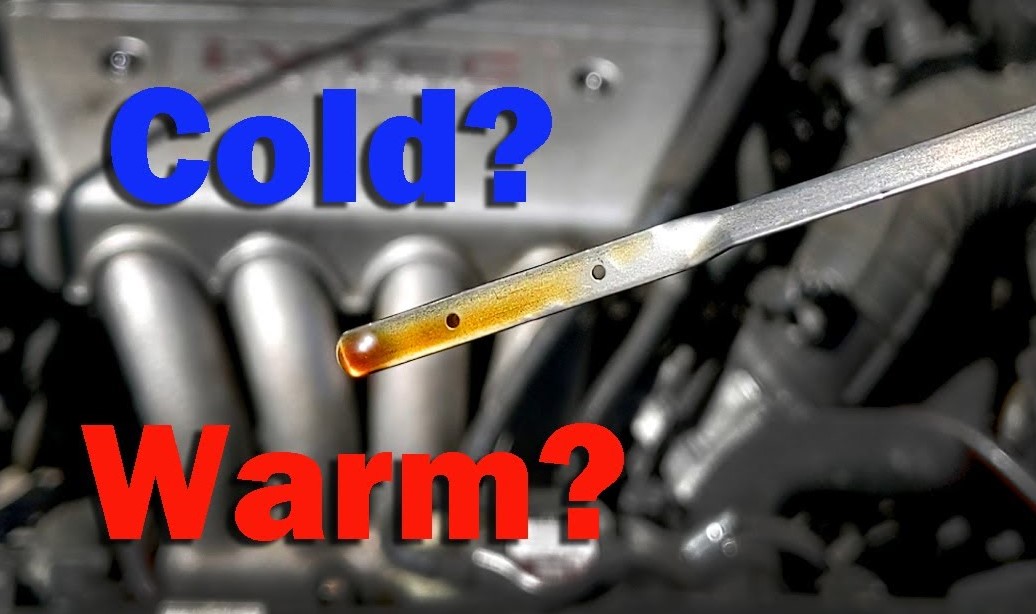
Healthy oil is amber or light brown. Very dark or black oil may be dirty but still usable depending on mileage. Milky oil may indicate coolant leak urgent attention required.
Step 5: Note Changes Over Time
Keep a log. Record oil level each month. Sudden drops (more than 0.5 quart per month) may indicate leaks or engine wear.
Extra Technical Details
-
Oil Type Matters: Synthetic oils handle heat better and maintain viscosity across temperatures. Conventional oils thin more at high temperatures.
-
High Mileage Engines: Older engines may burn oil faster. Checking oil hot and cold helps notice differences in consumption.
-
Foaming and Aeration: Overfilling causes oil to foam. Foaming reduces lubrication and can raise engine temperature by 5–10°C, stressing engine parts.
-
Dipstick Markings: Most dipsticks show “MIN” and “MAX.” Oil should stay in the middle for optimal protection. Some engines allow a 0.25-quart variation.
How Often to Check Oil?
-
New cars: Every month or 1,000 miles.
-
Older cars: Weekly checks recommended, especially for engines with leaks or high mileage.
-
Long trips: Check before and after long drives to prevent overheating or oil starvation.
FAQs
Q1: Is it dangerous to check oil immediately after driving?
Yes. Oil is hot and may burn hands. Hot readings can also appear higher than the true level.
Q2: Can oil level affect fuel efficiency?
Yes. Low or overfilled oil increases friction or pressure, reducing efficiency by 1–3% in average cars.
Q3: Does oil color matter for engine health?
Yes. Dark oil may indicate contamination or extended use. Milky oil can signal a coolant leak.
Q4: How much oil should I add if low?
Add small amounts, about 0.25 quarts at a time. Recheck level after each addition. Overfilling can harm the engine.
Q5: Can I use different oil types in hot or cold seasons?
Viscosity matters. 5W-30 works in cold and hot climates. Thicker oil like 10W-40 is better for very hot engines.
Conclusion
Motor oil checks prevent engine damage. Cold readings give true volume. Hot readings help understand circulation. Both methods work with proper care. Use a clean dipstick, park on level ground, and observe oil condition. Record levels regularly. Choose the right oil type. Small actions today prevent major engine problems tomorrow.