

Mixing motor oil brands sparks plenty of debate among car enthusiasts and everyday drivers alike. Each brand uses its own blend of base oils and additives, designed to optimize engine performance and protect against wear.
Combining different formulas can sometimes change how these additives interact, which may affect lubrication, engine efficiency, and long-term durability. Modern engines tolerate minor variations better than older models, but staying cautious ensures peak performance.
Understanding oil specifications, such as viscosity and manufacturer approvals, helps make informed decisions without risking damage. Many mechanics agree that topping off oil with a different brand in emergencies is usually safe, yet frequent mixing without careful consideration could reduce the oil’s effectiveness.
Knowing how your engine responds to different oils and following manufacturer recommendations provides peace of mind. Every car owner benefits from learning the subtle differences between brands to maintain smooth operation and prolong engine life.
Can You Mix Motor Oil Brands?
Motor oil protects your car engine. It reduces friction, carries away heat, and prevents engine wear. People often wonder if they can mix different brands of motor oil. The short answer is yes, but there are rules.
The long answer involves oil types, grades, additives, and engine requirements. Understanding these can help prevent engine damage and improve performance.
Mixing the wrong oils can cause reduced lubrication, higher engine wear, and lower fuel efficiency. It is especially important for modern engines that run hotter and use thinner oils.
How Motor Oil Works?
Motor oil is more than just a lubricant. It has four main roles:
-
Lubrication – Reduces friction between moving engine parts.
-
Cooling – Carries heat away from pistons and bearings.
-
Cleaning – Contains detergents that remove sludge, dirt, and combustion residue.
-
Protection – Adds corrosion inhibitors to prevent metal parts from rusting.
Every brand uses slightly different chemical formulations, even if they meet the same standards. These differences matter when mixing oils.
Types of Motor Oil
Motor oil comes in three main types.
1. Conventional Oil
-
Made from crude oil.
-
Less refined than synthetic oils.
-
Cheaper, good for older cars.
-
Works well under normal driving conditions.
2. Synthetic Oil
-
Chemically engineered for high performance.
-
Performs well in extreme heat and cold.
-
Reduces engine wear up to 25% compared to conventional oils.
-
Lasts longer, usually 7,500–15,000 miles between changes.
3. Synthetic Blend Oil
-
Mix of conventional and synthetic oil.
-
Offers better protection than conventional oil, but less than full synthetic.
-
Lasts 5,000–7,500 miles between oil changes.
Mixing oils of the same type is generally safe. Mixing conventional and synthetic occasionally is safe, but doing it often reduces oil efficiency and engine protection.
Understanding Oil Grades and Viscosity
Oil grades show thickness at different temperatures. Common examples: 5W-30, 10W-40.
-
“W” Number: Cold weather flow. Lower number = thinner in winter.
-
Second Number: High-temperature viscosity. Higher number = thicker at engine heat.
Example: 5W-30 flows easier at cold start than 10W-40 but still protects at high temperatures.
Mixing oils of the same grade is safer. Mixing 5W-30 with 10W-40 changes how oil flows. This can cause:
-
Poor lubrication in cold starts
-
Higher engine friction in hot conditions
-
Reduced fuel efficiency
Additives and Oil Chemistry
Motor oils contain additives like:
-
Detergents: Clean sludge and deposits
-
Dispersants: Keep dirt particles suspended
-
Anti-wear agents: Protect metal surfaces
-
Viscosity modifiers: Keep thickness stable across temperatures
-
Corrosion inhibitors: Prevent rust
Different brands may use slightly different chemicals. Mixing them can:
-
Reduce additive effectiveness
-
Form sludge or residue
-
Change friction properties
Studies by the Society of Automotive Engineers (SAE) show that mixed oils generally still meet minimum protection standards, but performance can drop 5–10% if additives conflict.
Risks of Mixing Oil Brands
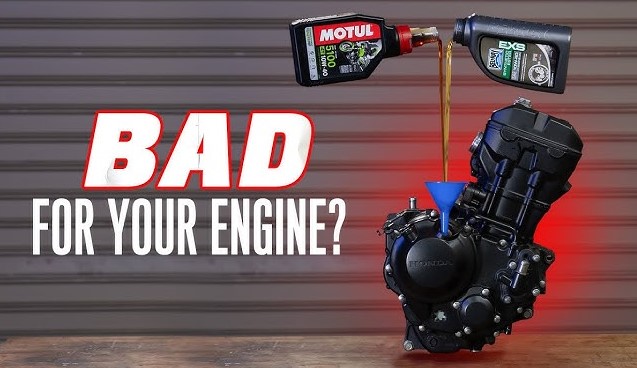
Even if oils meet industry standards, mixing brands can bring risks:
-
Warranty Concerns
-
Engine warranties can be voided if damage is linked to oil choice.
-
Always follow the manufacturer’s recommended oil type and grade.
-
-
Engine Wear
-
Inconsistent viscosity or conflicting additives can increase wear on bearings, pistons, and cams.
-
Modern engines running at high RPMs are more sensitive to oil quality.
-
-
Performance Issues
-
Thicker or thinner oil can increase fuel consumption.
-
Mixed oils may not protect in extreme temperatures.
-
Safe Practices for Mixing Motor Oil
Follow these rules to keep engines safe:
-
Match oil type: Conventional with conventional, synthetic with synthetic.
-
Match oil grade: Always check the numbers like 5W-30 or 10W-40.
-
Check standards: Look for API (American Petroleum Institute) or ACEA (European Automobile Manufacturers Association) ratings.
-
Use mixing only for top-ups: If oil is low, adding a different brand temporarily is fine. Replace with full oil change soon.
-
Avoid repeated mixing: Finish one brand before switching to another.
How Long Can Mixed Oil Last?
Mixed oils do not last as long as pure oil. Approximate lifespans:
| Oil Type | Normal Life | Mixed Life |
|---|---|---|
| Conventional | 3,000–5,000 miles | 2,500–4,500 miles |
| Synthetic Blend | 5,000–7,500 miles | 4,500–6,500 miles |
| Full Synthetic | 7,500–15,000 miles | 6,500–13,000 miles |
Changing oil on schedule is more important than worrying about occasional mixing.
Signs Mixed Oil May Cause Problems
Watch your engine for:
-
Strange engine noises or knocking
-
Increased oil consumption
-
Oil warning lights on the dashboard
-
Smoke from the exhaust
If any of these appear, change the oil immediately and use one brand recommended for your car.
Final Thoughts
Mixing motor oil brands is possible but not always ideal. Using oils of the same type, grade, and standards reduces risk. Occasional mixing for top-ups is safe, but repeated mixing can reduce protection and engine life. Following the car manual and changing oil on schedule keeps the engine healthy and running efficiently.
FAQs
1. Can I mix synthetic and conventional oil?
Yes, for small top-ups or emergencies. Do a full oil change soon after.
2. Does mixing oil brands reduce engine life?
Repeated mixing of different brands can reduce protection and increase engine wear.
3. How can I check oil compatibility?
Compare oil type, grade, and standards (API, ACEA) on the label.
4. Can mixed oil affect fuel efficiency?
Yes, changes in viscosity may reduce fuel economy by 1–3%.
5. Is it safe to mix motor oils in older cars?
Older cars with simpler engines tolerate mixing better, but still stick to the same grade and type.