
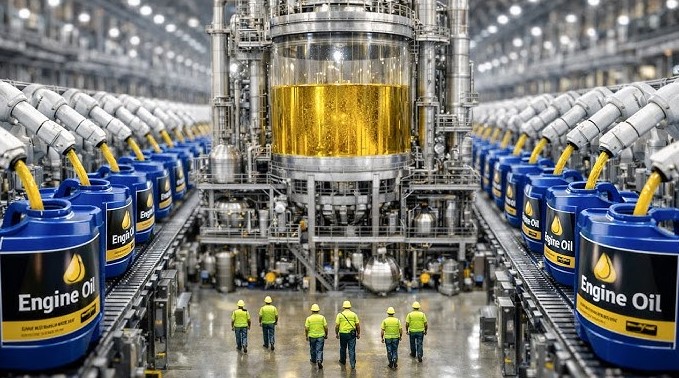
Synthetic motor oil powers engines with precision and efficiency. Unlike conventional oil, it starts from carefully refined base oils that undergo chemical engineering to achieve uniform molecular structures.
Manufacturers select high-quality base stocks, then apply processes such as hydrocracking and polymerization to remove impurities and enhance performance. This produces oil that flows smoothly at low temperatures, resists breakdown under heat, and shields engine components from wear.
Additives tailor the oil for specific needs, including anti-foaming, corrosion protection, and friction reduction. Each batch goes through rigorous testing to meet industry standards and ensure consistency. Drivers benefit from longer oil change intervals, improved fuel efficiency, and cleaner engine operation.
Understanding how synthetic motor oil is made reveals the science and precision behind every drop that lubricates an engine. It highlights the advanced technology that keeps vehicles running longer and engines performing at their best.
How is Synthetic Motor Oil Made?
Synthetic motor oil plays a crucial role in keeping engines clean, efficient, and long-lasting. Unlike conventional oil, synthetic oil is not just refined from crude oil.
It is chemically engineered to give better protection, reduce wear, and perform in extreme temperatures. Modern cars, especially high-performance engines, often rely on synthetic oil for reliable operation.
What is Synthetic Motor Oil?
Synthetic oil is made from artificially created molecules. Regular motor oil comes from crude oil and contains natural variations in molecules.
These variations can cause sludge, deposits, or breakdown under heat. Synthetic oil, on the other hand, uses uniform molecules.
Key Features of Synthetic Oil:
-
Stable under high and low temperatures
-
Reduced friction between engine parts
-
Longer lifespan compared to conventional oil
-
Prevents engine deposits and sludge
The Detailed Process of Making Synthetic Motor Oil

Synthetic motor oil production is a precise chemical and industrial process. Each stage ensures the oil performs well under stress and lasts longer.
1. Selecting Base Chemicals
The first step is choosing the right base fluid. Base fluids form 70–90% of the final oil. Common types:
-
Polyalphaolefins (PAOs): Produced from ethylene molecules through a process called polymerization. PAOs have high thermal stability and flow easily at low temperatures. Most passenger cars use PAO-based synthetic oil.
-
Esters: Derived from organic acids and alcohol. Esters are highly lubricating and resist oxidation. They are used in performance engines, motorcycles, and aviation engines.
-
Hydrocracked or Group III oils: Some synthetics use highly refined mineral oil with chemical modification. They are sometimes called “synthetic-like” oils.
Data Point: PAOs can withstand temperatures up to 500°F (260°C) without breaking down. Conventional mineral oil starts to degrade around 300°F (150°C).
2. Refining and Purifying
Base chemicals must be extremely pure. Any impurities can cause oil to break down or form sludge. Refining removes sulfur, nitrogen, metals, and other unwanted elements.
Processes used:
-
Hydrocracking: Breaks long hydrocarbon chains into shorter, more uniform ones.
-
Hydrotreating: Uses hydrogen and high pressure to remove impurities and stabilize molecules.
Result: Oil molecules are uniform in size and shape, reducing friction and wear inside the engine.
3. Adding Performance Enhancers
Synthetic base oil alone is not enough. Additives make the oil capable of handling engine stress.
Common Additives:
| Additive Type | Function | Typical Amount |
|---|---|---|
| Detergents | Remove dirt and deposits | 5–10% |
| Dispersants | Keep sludge suspended | 3–5% |
| Anti-wear agents (Zinc, Phosphorus) | Protect metal surfaces | 1–3% |
| Viscosity modifiers | Maintain oil thickness in hot/cold | 2–4% |
| Pour point depressants | Help oil flow in cold | 0.5–2% |
| Antioxidants | Prevent breakdown from heat | 1–2% |
| Corrosion inhibitors | Protect metal surfaces | 1–2% |
Each oil brand uses a unique formula. The combination of base oil and additives determines:
-
Viscosity grade (like 5W-30)
-
Engine protection level
-
Oil life
Example: A fully synthetic 5W-30 oil flows easily at -30°F (-34°C) and can protect the engine at 500°F (260°C).
4. Blending
After refining and adding chemicals, all ingredients are blended. Blending ensures every batch has consistent quality. Large industrial mixers maintain exact temperature and pressure for uniformity.
Key Fact: Even a 1% variation in additives can reduce performance or cause engine deposits.
5. Testing and Quality Control
Testing ensures the oil meets or exceeds industry standards. Manufacturers check:
-
Viscosity: Oil thickness at cold and hot temperatures
-
Flash point: Temperature at which oil can ignite (safety test)
-
Oxidation stability: Resistance to chemical breakdown
-
Wear tests: Using engine simulation machines
-
Foaming resistance: Oil must not form bubbles that reduce lubrication
Standards are set by organizations like:
-
API (American Petroleum Institute) – classifies oil as SN, SP, etc.
-
ACEA (European Automobile Manufacturers’ Association) – sets European standards like A5/B5
Types of Synthetic Motor Oil
Different synthetic oils meet different engine needs:
-
Full Synthetic: 100% chemically engineered. Best for high heat, extreme cold, and high-performance engines.
-
Synthetic Blend: Mix of conventional and synthetic oil. Offers better performance than regular oil at lower cost.
-
High-Mileage Synthetic: Contains extra seal conditioners for older engines. Reduces leaks and oil consumption.
Data Insight: Cars using full synthetic oil may extend oil change intervals up to 15,000 miles, compared to 3,000–5,000 miles for conventional oil.
Benefits of Synthetic Motor Oil
Synthetic oil offers measurable advantages over conventional oil:
-
Reduces engine wear by up to 25%
-
Maintains flow at temperatures as low as -30°F (-34°C)
-
Resists breakdown at temperatures over 500°F (260°C)
-
Keeps engines cleaner, reducing carbon deposits by 30–50%
-
Improves fuel efficiency slightly due to lower friction
FAQs About Synthetic Motor Oil
1. Can synthetic oil damage engines?
No. Modern engines can safely use synthetic oil, even if they previously used conventional oil.
2. How often should synthetic oil be changed?
Change every 7,500–15,000 miles, depending on driving and oil type.
3. Does synthetic oil improve fuel efficiency?
Yes. Reduced friction can improve fuel efficiency by 1–3%.
4. Can synthetic oil be mixed with regular oil?
Yes, mixing is safe, but it may reduce some benefits of synthetic oil.
5. Why is synthetic oil more expensive?
Cost comes from chemical processing, refining, and additives that improve performance and engine protection.
Conclusion
Synthetic motor oil is a carefully engineered product. It starts with pure base chemicals, goes through refining, additive blending, and rigorous testing. Engines benefit from less wear, higher performance, and longer oil life.
Drivers gain peace of mind knowing their engine is protected under all conditions. Synthetic oil represents advanced technology in engine lubrication, keeping vehicles running smoothly for years.