
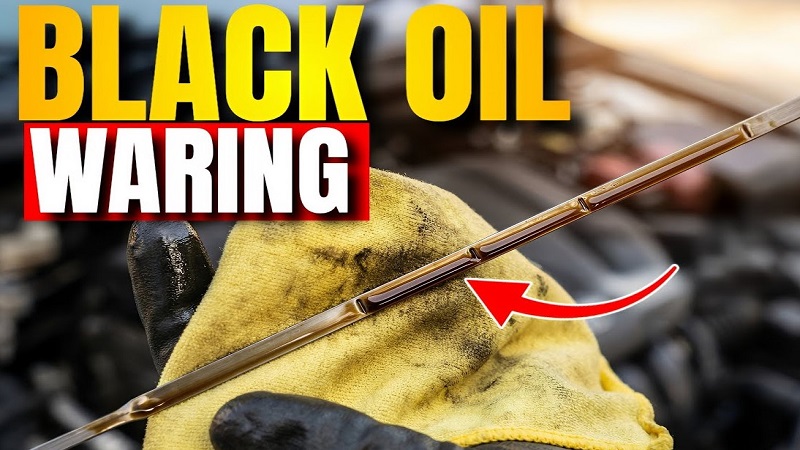
Black motor oil often sparks worry for drivers who expect a golden color under the hood. Fresh oil enters an engine with a clear amber glow, yet miles on the road quickly change that shade. Heat, fuel residue, and microscopic metal particles mix inside the engine and alter the oil’s appearance.
Detergent additives inside modern oil grab soot, dirt, and carbon so the filter and oil can carry them away. That process protects pistons, bearings, and valves from harmful buildup. Dark color usually signals that the oil performs its cleaning job rather than failing.
Every combustion cycle releases tiny carbon fragments that slip past piston rings and enter the oil. High engine temperatures also break down fuel traces and create more particles that stain the fluid.
Over time the once-amber liquid turns deep brown or black. Drivers who understand this change gain confidence about engine health and maintenance timing.
Why Does Motor Oil Turn Black?
Fresh motor oil has a clear amber color. After some time inside the engine, that same oil turns dark brown or black. Many car owners notice this change and feel worried. A black color often looks dirty or worn out.
The truth is simple. Motor oil changes color because it does its job. Oil collects dirt, heat by-products, and tiny metal particles from the engine. All of these things slowly change the color of the oil.
Dark oil does not always mean bad oil. In many cases, black oil shows that the oil cleans the engine well. Still, drivers need to understand why this color change happens and when an oil change becomes necessary.
The sections below explain the reasons in clear and simple terms.
Why Motor Oil Turns Black?
Motor oil works inside a very hot and busy environment. Pistons move fast. Fuel burns. Small particles move around. Oil travels through every part of the engine and carries away dirt and heat. Several factors cause oil to turn black.
Heat Inside the Engine
Engines produce high heat during operation. Oil absorbs some of that heat. High temperature breaks down fuel residue and other materials.
Those materials mix with the oil and change its color.
Short trips in city traffic increase this problem. Engines heat up and cool down many times. Each cycle adds more contamination to the oil.
Dirt and Dust
Air enters the engine through the intake system. Dust and tiny dirt particles travel with that air. The air filter stops most of them. Some very small particles still pass through.
Motor oil traps those particles and holds them. That process protects engine parts from damage. Dirt buildup slowly darkens the oil. A normal process. A good sign that oil performs its cleaning job.
Carbon From Fuel Burning
Fuel burns inside the cylinders. That process creates carbon particles. Some of those particles escape past the piston rings. Engine oil captures them.
Carbon has a very dark color. Oil absorbs those particles and slowly turns black. Diesel engines show this effect faster. Diesel fuel creates more carbon during combustion.
Metal Particles
Engine parts move against each other. Metal surfaces create tiny particles during normal wear. Oil collects those particles and carries them to the oil filter.
Small amounts appear normal. Too many particles may signal engine wear. Black oil often contains a mix of carbon, dirt, and small metal particles.
Oil Additives Doing Their Job
Motor oil contains additives. These chemicals clean engine parts and prevent sludge buildup. Detergent additives break down deposits inside the engine.
They keep particles floating in the oil instead of sticking to engine parts. That cleaning action darkens the oil. Dark color often shows that the additives work properly.
Does Black Oil Mean Bad Oil?
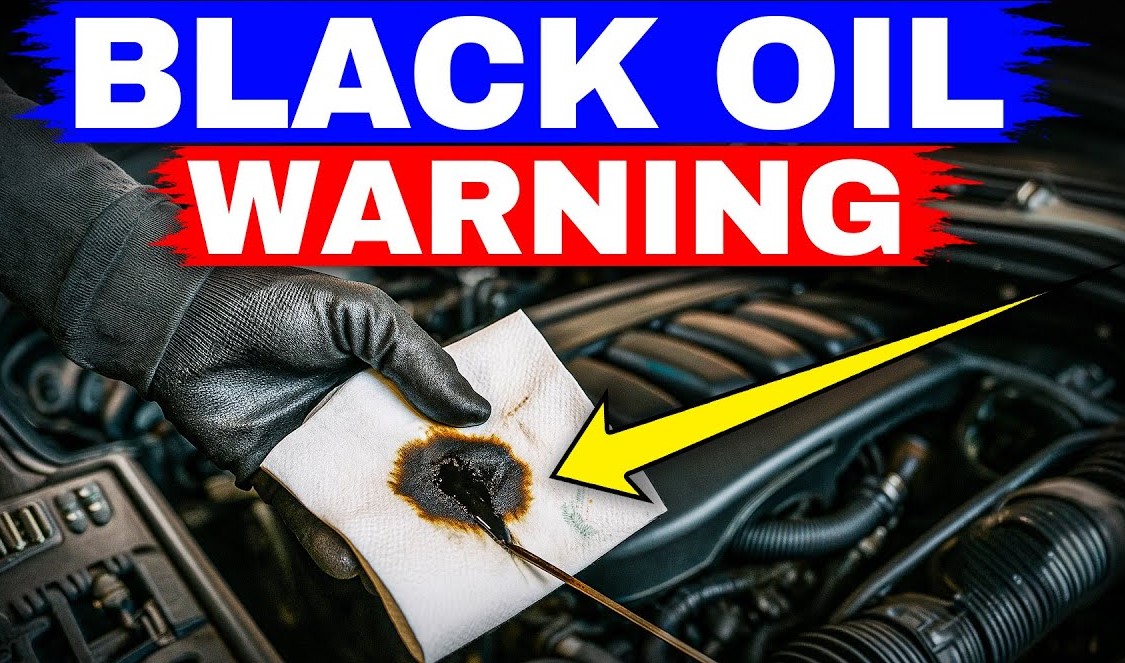
Not always.
Dark oil often still protects the engine well. Color alone cannot tell the full story.
Some engines turn oil black very fast. Diesel engines provide a good example. Oil may look black after only a few hundred kilometers.
Several factors matter more than color:
-
Oil thickness
-
Engine performance
-
Oil change interval
-
Oil smell
-
Presence of metal particles
Drivers should follow the recommended oil change schedule instead of judging oil only by color.
Signs That Oil Needs Replacement
Black oil sometimes signals normal use. Other signs may show that the oil reached the end of its life. Watch for these warning signs.
Thick or Sludgy Oil
Healthy oil feels smooth and fluid. Old oil becomes thick and sticky.
Sludge buildup can block small oil passages in the engine.
A quick dipstick check often reveals this problem.
Burnt Smell
Oil that smells burnt usually stayed inside the engine too long.
High heat damages the oil molecules. Engine protection drops after that damage.
Engine Noise
Fresh oil creates a smooth protective layer. Old oil loses that ability.
Loud ticking or knocking sounds may appear if oil breaks down.
Poor Fuel Economy
Old oil increases friction inside the engine. More friction means the engine works harder.
Higher fuel consumption often follows.
How Often Oil Turns Black?
Different engines change oil color at different speeds. Several conditions affect this process.
Driving Conditions
Heavy traffic causes frequent stopping and starting. Engine heat builds quickly. Short trips increase contamination because the engine does not reach full operating temperature long enough. Both situations darken oil faster.
Engine Type
Diesel engines turn oil black very quickly due to higher carbon production. Gasoline engines usually take longer. Turbocharged engines also heat oil more than standard engines.
Oil Quality
High quality oil contains stronger additives. These additives hold more contaminants without losing performance. Cheap oil may darken faster and lose effectiveness sooner.
Tips to Keep Motor Oil Clean Longer
Good maintenance helps oil stay effective for a longer time.
A few simple habits help protect the engine.
-
Replace the air filter regularly
-
Follow the correct oil change interval
-
Use good quality motor oil
-
Avoid very short trips when possible
-
Check oil level once every few weeks
Regular checks help detect problems early. Small effort. Big benefit for engine life.
FAQs
Why does new oil turn black so quickly?
Cleaning additives inside the oil break down deposits in the engine. Dirt and carbon mix with the oil. That process changes the oil color fast.
Is black oil harmful to the engine?
Black oil does not always mean damage. Oil often turns dark while it still protects engine parts well.
How can I check motor oil condition?
Use the dipstick. Look at color, texture, and level. Thick or gritty oil may need replacement.
Does synthetic oil turn black?
Yes. Synthetic oil also collects carbon and dirt. Color change still occurs during normal engine operation.
Should I change oil just because it looks black?
Follow the vehicle manufacturer’s service schedule. Color alone cannot determine oil life.
Conclusion
Motor oil turns black for many normal reasons. Heat, carbon from fuel, dirt particles, and cleaning additives all play a role. Oil collects these materials while protecting the engine.
Dark oil often shows that the oil cleans the engine well. Color alone cannot tell the full condition of the oil.
Drivers should check oil level regularly and follow the recommended oil change schedule. Good oil and regular maintenance keep the engine smooth, quiet, and reliable for a long time.