

Motor oil serves as the lifeblood of an engine, keeping parts lubricated, reducing friction, and preventing wear. Extreme cold temperatures can raise concerns about oil performance. While most people assume oil behaves like water in the cold, it reacts differently due to its unique chemical composition.
Engine oils contain additives that maintain flow even at low temperatures, but extreme Arctic conditions can push their limits. Understanding how oil reacts to freezing temperatures helps car owners prevent engine damage and maintain reliable performance.
Viscosity, the measure of oil thickness, plays a key role in determining how easily it circulates through an engine during cold starts. Synthetic oils generally handle colder climates better than conventional oils, maintaining smooth movement even in subzero weather.
Knowing the freezing point of various oils and selecting the right type for local conditions ensures the engine remains protected, even in harsh winter months.
Can Motor Oil Freeze?
Motor oil is essential for engine health. It keeps engine parts moving smoothly, reduces friction, and helps prevent overheating. People often ask if motor oil can freeze during very cold weather.
Understanding how oil behaves in low temperatures helps car owners prevent engine problems and store oil safely.
How Cold Affects Motor Oil?
Motor oil behaves differently from water. Water freezes at 32°F (0°C), forming solid ice. Motor oil does not have a fixed freezing point.
Instead, it becomes thicker and harder to move as the temperature drops. This thickening is called increased viscosity.
Viscosity Explained
Viscosity is the measure of a liquid’s thickness or resistance to flow. Cold increases viscosity. For motor oil:
-
10W-30 oil flows well above -20°F (-29°C). Below that, it becomes thick and harder for the engine to pump.
-
5W-20 oil remains thinner in colder temperatures and helps engines start more easily.
-
0W-30 oil is even better for extreme cold, flowing smoothly at -40°F (-40°C).
The “W” in oil grades stands for winter. Lower numbers before “W” mean better flow in cold weather.
Types of Motor Oil and Their Behavior in Cold
Different oils react differently to low temperatures.
Conventional Oil
Conventional oil comes from crude oil and has basic additives. It works well in normal climates but thickens faster in extreme cold. Engines may take longer to start.
Data Example: At -20°F (-29°C), conventional 10W-30 oil can be up to 10 times thicker than at 68°F (20°C).
Synthetic Oil
Synthetic oil is chemically engineered for consistent performance. Additives reduce thickening in cold weather. It flows better at very low temperatures.
Data Example: Synthetic 0W-30 oil can flow at -40°F (-40°C) almost as easily as conventional oil at 32°F (0°C).
Blend Oils
Blend oils combine conventional and synthetic oil. They perform better than conventional oil but not as well as full synthetic. They provide moderate cold protection at a lower cost than full synthetic oils.
Extreme Cold and Motor Oil
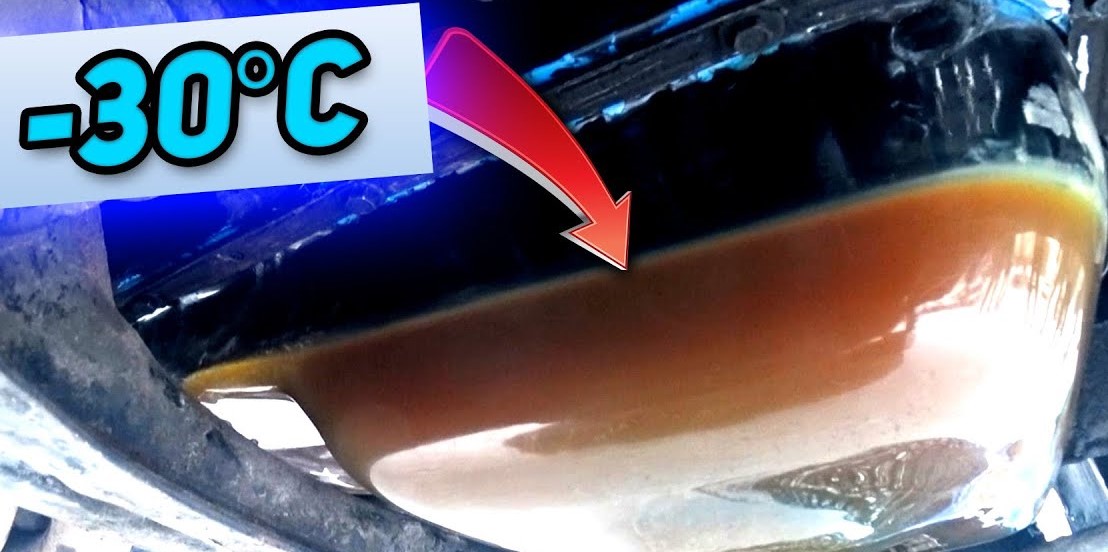
Motor oil does not freeze solid in normal winter temperatures. Thickening is the main problem. Thick oil:
-
Makes engine start slower.
-
Reduces lubrication, causing more wear on moving parts.
-
Can lower fuel efficiency temporarily.
At extremely low temperatures below -40°F (-40°C), even synthetic oils can become too thick. Engines may struggle to start without additional measures.
Cold Weather Protection for Motor Oil
Car owners can take several steps to prevent oil problems in winter:
-
Garage Parking: Reduces exposure to extreme cold.
-
Winter-Grade Oil: Follow the manufacturer’s recommendations. Oils like 0W-20 or 5W-30 perform better in freezing conditions.
-
Engine Warm-Up: Running the engine for a few minutes before driving allows oil to reach normal flow.
-
Oil Storage: Store spare oil indoors at room temperature. Avoid outside storage in freezing conditions.
Signs Motor Oil Is Too Thick
Thick oil can damage engines if ignored. Watch for:
-
Engine struggles or takes longer to start.
-
Engine noises like ticking or knocking.
-
Oil pressure warning light.
Early recognition can prevent engine damage and costly repairs.
How Temperature Affects Oil Flow (Data Table)
| Oil Type | Flow at 68°F (20°C) | Flow at -20°F (-29°C) | Flow at -40°F (-40°C) |
|---|---|---|---|
| 10W-30 | Normal | Thick | Very thick |
| 5W-20 | Normal | Flows | Thick |
| 0W-30 Synthetic | Normal | Flows easily | Flows |
| Blend 5W-30 | Normal | Slightly thick | Thick |
This table shows how different oils handle extreme cold. Lower W numbers and synthetic oils maintain better flow.
Final Thoughts
Motor oil does not freeze like water. Cold weather only increases its thickness. This can make engine starting harder and reduce lubrication temporarily.
Using the right oil type, storing it properly, and warming engines before driving ensures safe operation in winter.
Paying attention to oil grades and viscosity helps engines last longer and perform better in all temperatures. Understanding how oil behaves in extreme cold keeps cars reliable, even in the harshest winters.
FAQs About Motor Oil Freezing
1. Can motor oil freeze like water?
No. Motor oil thickens in the cold but does not form ice. Thick oil flows slower but stays liquid.
2. Which oil is best for winter?
Synthetic oils with low W numbers, like 0W-20 or 5W-30, flow better in cold weather.
3. Can thick oil damage an engine?
Yes. Thick oil reduces lubrication, causing more wear and harder engine starts.
4. How should I store motor oil in winter?
Keep it indoors at room temperature. Avoid storage in unheated garages during extreme cold.
5. What happens if I use conventional oil in very cold weather?
The oil thickens, making the engine harder to start. Engine parts may wear faster until the oil warms up.