

Plenty of homeowners stare at a half-used bottle of car motor oil and wonder if it can power their lawn mower just as well. The idea sounds practical. Both engines burn fuel, create heat, and rely on oil to reduce friction. That similarity makes the swap feel harmless.
Lawn mower engines operate under different conditions than car engines, though. Smaller engines run hotter, lack complex filtration systems, and demand oil that matches their specific design. A mismatch can affect performance, fuel efficiency, and long-term durability.
Cost savings might tempt you to pour in whatever sits on the garage shelf. Smart maintenance protects your equipment and keeps your mower cutting smoothly all season.
Understanding the differences between automotive oil and small-engine oil helps you avoid unnecessary repairs and frustrating breakdowns. A little knowledge now can save money, time, and effort later.
Can You Use Car Motor Oil in Lawn Mower?
Many people ask a common question: Can you use car motor oil in a lawn mower? The answer is not just yes or no. The real answer depends on engine type, oil weight, and weather.
Lawn mower engines are small but powerful. They run at high speed. Most push mowers run between 2,800 and 3,200 RPM. That is fast for a small air-cooled engine. Oil must handle heat, friction, and dirt.
This guide explains everything in simple words. You will learn how car oil works in a mower, what type to use, and what risks you should know.
How a Lawn Mower Engine Works?
Most modern lawn mowers use a 4-stroke engine. Brands like engines made by Briggs & Stratton or Honda follow this design.
A 4-stroke engine has four steps:
-
Intake
-
Compression
-
Power
-
Exhaust
Oil stays in a small oil sump at the bottom of the engine. The engine does not have a full oil pump system like a car. Many small engines use a splash lubrication system. A small dipper splashes oil onto engine parts.
No oil filter in most models. Dirt stays in the oil until you change it. That makes oil quality very important.
Can Car Motor Oil Handle a Lawn Mower Engine?
Yes, in most cases it can. But you must use the correct oil grade.
Car motor oil is designed for water-cooled engines. Cars keep engine temperature stable with coolant. Lawn mowers use air cooling. Air-cooled engines run hotter.
Average car engine temperature: around 195°F to 220°F.
Air-cooled small engine temperature: can reach 250°F to 300°F.
Heat matters. Thin oil can break down faster under high heat.
Understanding Oil Viscosity
Viscosity means thickness.
Oil bottles show numbers like:
-
SAE 30
-
10W-30
-
5W-30
What SAE 30 Means
SAE 30 is a single-grade oil. It stays thick at high temperature. It works best in warm weather above 40°F. Many mower manuals recommend SAE 30 for summer mowing.
What 10W-30 Means
10W-30 is multi-grade oil.
-
“10W” means winter rating
-
“30” means hot temperature thickness
This oil flows better in cold weather. It protects better during cold starts. Multi-grade oil can burn slightly more in very hot air-cooled engines. That means the oil level may drop faster.
Oil Consumption in Lawn Mowers
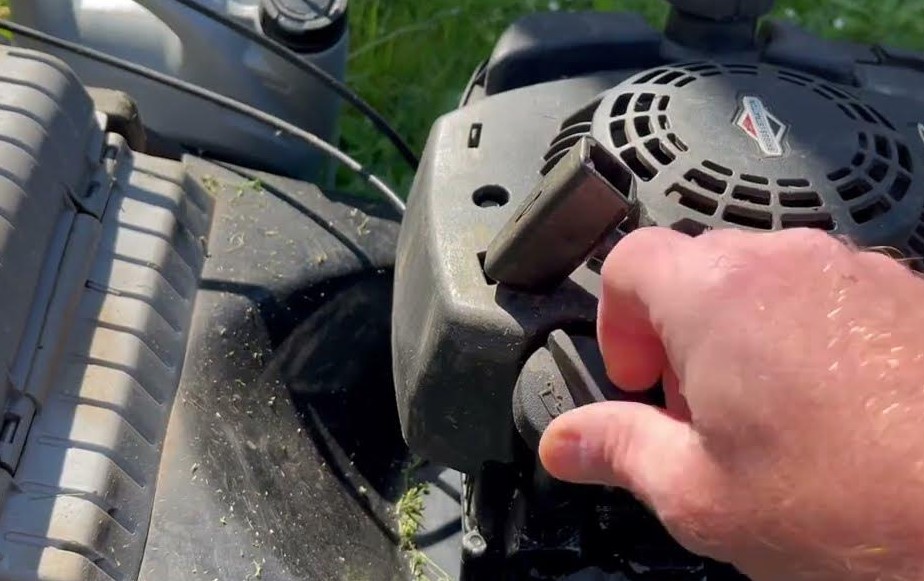
Small engines often burn a small amount of oil. This is normal.
Reasons include:
-
High engine speed
-
High operating temperature
-
Simple piston ring design
You may need to check oil level every 5 hours of use. Some engines can use 1 to 2 ounces of oil per mowing session. Never ignore low oil. Even 5 minutes of running with low oil can damage the engine.
Additives in Car Motor Oil
Car motor oil contains additives such as:
-
Detergents
-
Anti-wear agents
-
Corrosion protectors
-
Foam inhibitors
These additives clean and protect car engines. Lawn mower engines do not have oil filters, so dirt stays in the oil. Detergent oil still works in mowers.
In fact, modern mower engines are designed for detergent oil. Non-detergent oil belongs to very old engines only.
Synthetic vs Conventional Oil
Synthetic oil offers:
-
Better heat resistance
-
Slower breakdown
-
Cleaner engine parts
Conventional oil costs less. It works fine for normal mowing.
Temperature range example:
-
Conventional oil works well up to about 250°F.
-
Synthetic oil stays stable above 300°F.
For heavy mowing in hot climates, synthetic oil may provide better protection.
When You Should Not Use Car Motor Oil?
Avoid car oil in these cases:
-
2-stroke mower engines
-
Oil weight not recommended by manual
-
Oil older than 2 years
-
Oil contaminated with dirt or water
2-stroke engines mix oil with fuel. Using car motor oil in fuel will damage the engine. Always read the oil cap or manual.
Climate and Oil Choice
Weather affects oil performance.
Hot Climate (Above 85°F)
SAE 30 often works best. Thick oil protects better at high heat.
Mild Climate (40°F to 85°F)
10W-30 works well for most users.
Cold Climate (Below 40°F)
5W-30 flows easier during cold starts. Cold oil moves slowly. Thick oil can cause hard starting and extra engine wear.
How Much Oil Does a Lawn Mower Need?
Most push mowers need:
-
15 to 20 ounces of oil
-
About 0.5 to 0.6 liters
Riding mowers need more.
Check the dipstick. Oil should sit between the “low” and “full” marks.
Overfilling causes:
-
Smoke
-
Oil leaks
-
Dirty air filter
Underfilling causes:
-
Engine knock
-
Overheating
-
Permanent engine damage
Oil Change Interval and Data
First oil change: after 5 hours in a new mower. Regular oil change: every 25 to 50 hours. At least once per season.
Oil darkens due to:
-
Carbon buildup
-
Metal wear particles
-
Dirt from air
Fresh oil improves lubrication and lowers engine temperature. Clean oil can reduce friction by up to 30% compared to very dirty oil.
Real Risks of Using Wrong Oil
Using wrong oil weight can cause:
-
Thin oil film
-
Higher metal contact
-
Faster engine wear
Long-term effects include:
-
Reduced compression
-
Power loss
-
Hard starting
-
Short engine life
A small engine can last 500 to 1,000 hours with proper care. Poor oil choice can cut that life in half.
Practical Advice
Keep oil simple.
Use:
-
SAE 30 for warm weather
-
10W-30 for mixed weather
-
Fresh oil from sealed bottle
Check oil before each mowing session.
Store oil in cool, dry place. Close the cap tight.
FAQs
Can I use the same oil for my car and lawn mower?
Yes, if the oil weight matches your mower manual. Many people use 10W-30 in both machines.
Does car motor oil damage a lawn mower?
No, not if you use correct viscosity and clean oil. Damage happens from wrong type or low oil level.
How do I know my mower uses 4-stroke engine?
Most modern push mowers use 4-stroke engines. Separate oil cap and fuel tank confirm this.
Can I switch from conventional to synthetic oil?
Yes. Drain old oil fully before switching. No special steps needed.
What happens if oil gets too old?
Old oil loses thickness and protection. Engine parts wear faster.
Conclusion
Car motor oil works in most lawn mowers if you choose the correct grade. Oil weight, temperature, and engine type matter more than brand name.
Small engines run hot and fast. They need clean oil at the right level. Regular oil checks and timely changes protect your mower and extend engine life.